Best Time to Visit Koh Tao
December to April is the headline answer, but the real picture is more nuanced. Here is the month-by-month breakdown of weather, sea, dive visibility and crowd levels.
What this guide covers
The most popular time to visit Koh Tao is between December and April, when the weather is sunny, the sea is calm, and conditions are perfect for diving and snorkelling. Choosing the right time depends on what you want, perfect weather, fewer crowds, or better deals.
From May to September the island still sees good weather, although there can be occasional rain. Less crowded, a good option for travellers who prefer a quieter experience. October and November are the rainiest months, but accommodation prices are often lower.
Every part of the page
Each section below covers a distinct topic. Click in or scroll through, the structure follows how most travellers actually plan their day.
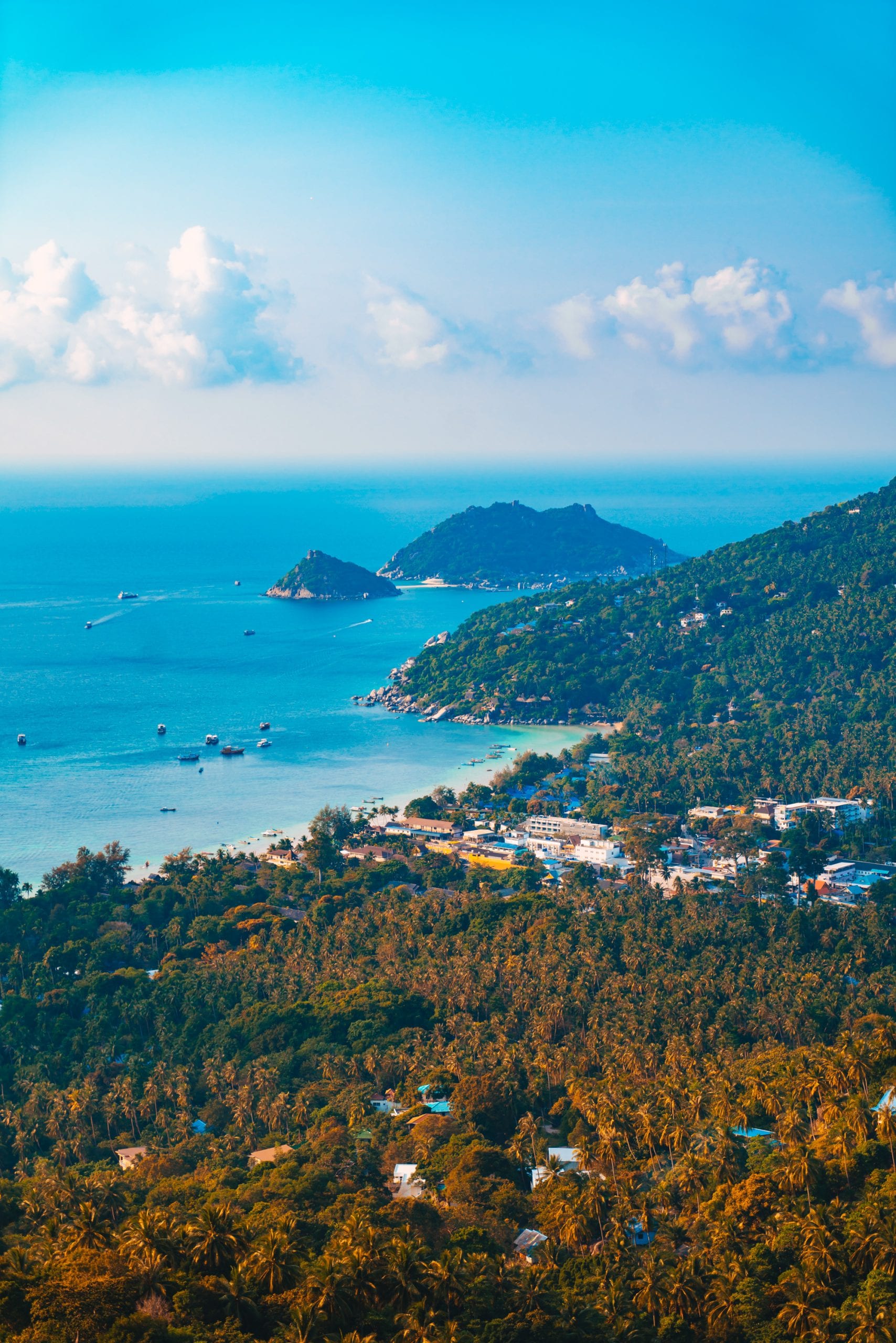
The three seasons on Koh Tao
Koh Tao sits in the Gulf of Thailand which means the rough months are the opposite of the Andaman side (Phuket, Krabi). High season runs mid-December to March with the calmest sea, fullest boats, and highest fares. Shoulder runs April to June and September to October, mixed weather with short squalls but mostly normal schedules.
Monsoon is November to mid-December, the biggest cancellation risk for ferries. Sea temperatures stay warm year-round (25 to 32 degrees C), so swimming is fine in any month. The variable is rain, wind, and what that does to dive visibility and ferry schedules.
Best for: matching the season to your trip priorities.
Ferry seasonalityDecember to February
The headline window. Calmest seas, clearest dive visibility (15 to 25 metres typical), least rain, full sunshine most days. Daytime temperatures 27 to 30 degrees, water temperature around 28 degrees. Also the busiest, fullest boats, highest fares, accommodation books out 2 to 4 weeks ahead.
December specifically gets a Christmas and New Year spike, the busiest single week of the year on the island. January and February are calmer crowd-wise but still high-season pricing. Book everything in advance, ferries 24 to 48 hours minimum, popular dive schools 1 to 2 weeks ahead.
Best for: dive courses, photographers, first-time visitors who want guaranteed weather.
Scuba in high season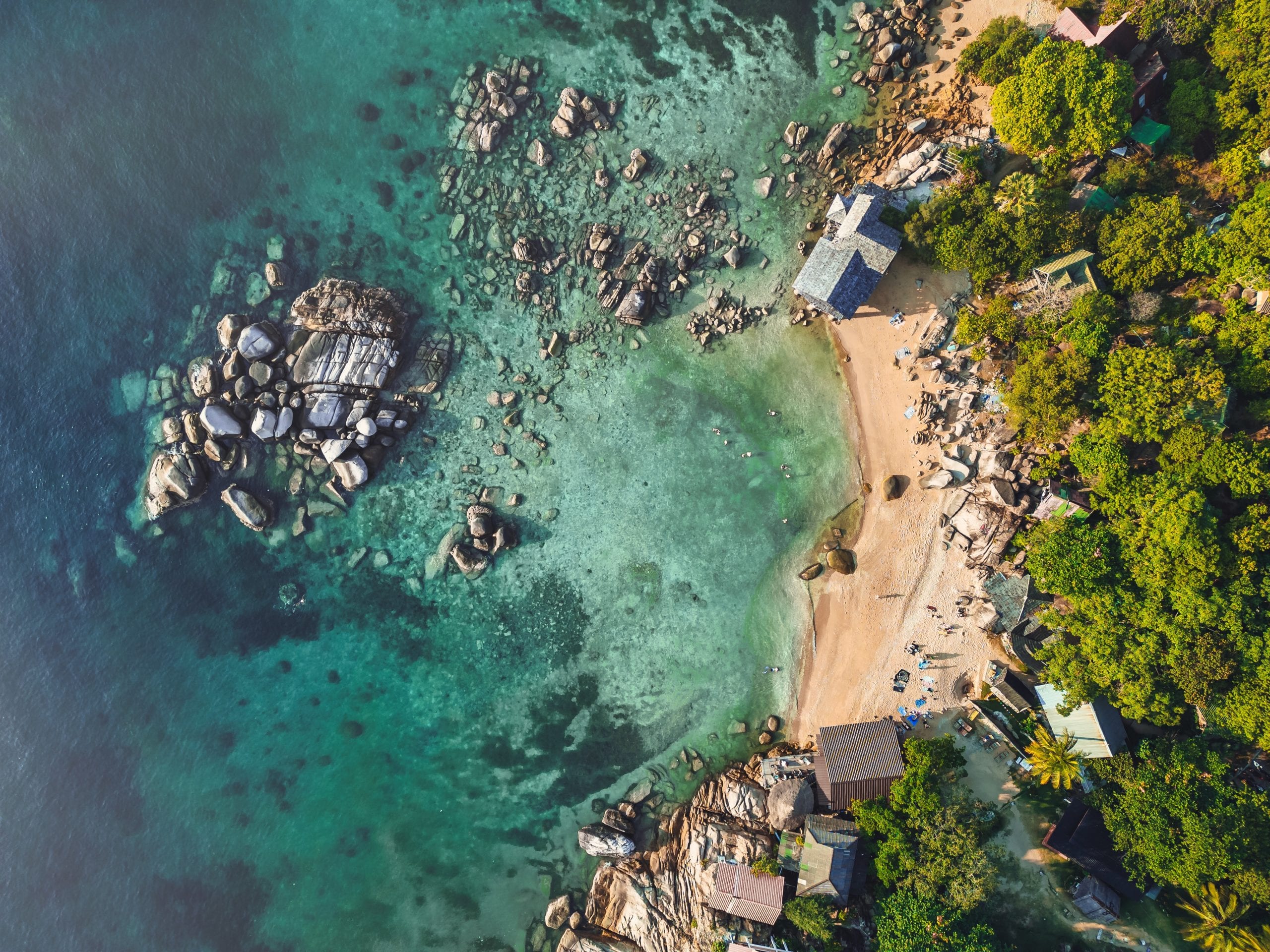
March to May
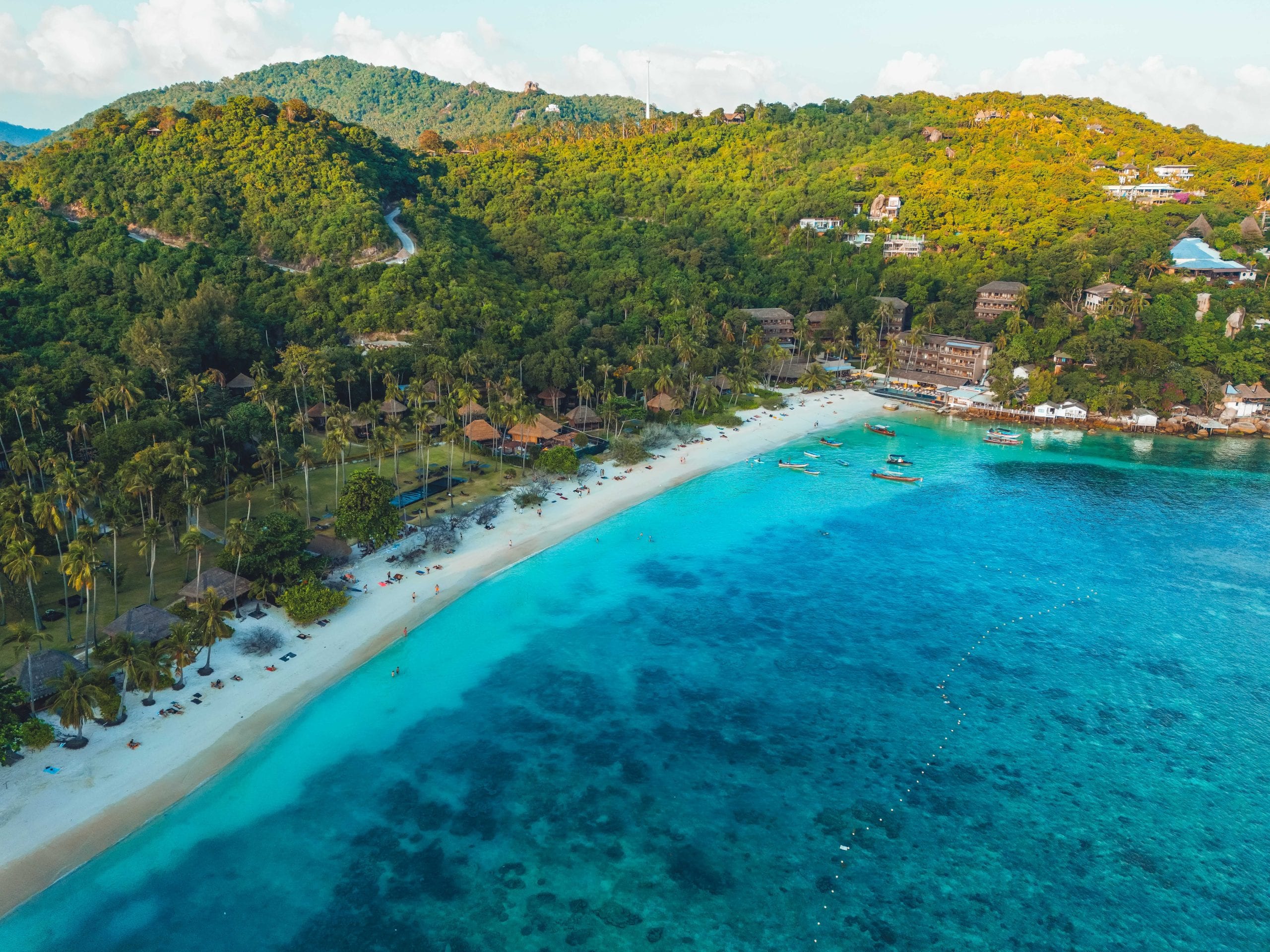
Often the sweet spot for travellers. March is still high-season weather but with the post-Songkran travel dip after April 15 makes the island noticeably quieter. Dive visibility stays strong, water temperature climbs to 29 to 30 degrees C. Hot months, daytime peaks 33 to 34 degrees in April and May.
Whale shark sightings traditionally peak around March to May at deeper dive sites like Chumphon Pinnacle and Sail Rock. Songkran (Thai New Year, April 13 to 15) is a busy week, both for foot traffic on Sairee and ferry bookings around Thailand.
Best for: travellers who want strong weather without peak-season crowds.
More on SongkranJune to September
Mixed weather but more good days than people expect. Short tropical squalls in afternoons, mostly clear mornings. Dive visibility drops slightly (10 to 18 metres typical) but conditions stay accessible. Fewer travellers, easier accommodation, more flexible pricing.
June and July are warm and humid with intermittent rain. August and September trend wetter, especially September which can have multi-day rain stretches. Ferries usually run normally, the occasional cancellation is more about wind than rain. Many travellers consider June and July the best value-to-experience window on the island.
Best for: budget-conscious travellers, dive-course bookers wanting smaller class sizes.
Where to stay (off-season)
October & November
The rainiest months and the highest ferry-cancellation risk. November in particular can have multi-day rain and rough sea windows. Dive visibility drops to 5 to 12 metres on bad days, normal on good ones. Cheaper accommodation and ferry fares but with the trade-off of unpredictable conditions.
Lomprayah typically runs more reliably than other operators in marginal weather, worth the small price premium in this window. Build flexibility into the trip, do not arrive on a tight schedule. Dive visibility can still be excellent on calm days, just less consistent than in high season.
Best for: travellers with flexible schedules who want the cheapest deals.
Monsoon ferry rulesFrequently asked questions
The questions travellers ask us most before they arrive.
What is the best time to visit Koh Tao?
When is dive visibility best?
What month is cheapest?
Is Koh Tao good in October?
When is whale shark season?
Should I avoid Songkran?
Is the rainy season a dealbreaker?
Plan around the season
Pick your month, then build the rest of the trip around what that season delivers.
Plan Your Trip