one breath, deeper

Freediving in Koh Tao

No tanks, no noise, just you, one breath, and the water. Slower, quieter, more focused than scuba. Koh Tao is one of the top freediving destinations in Southeast Asia.

The Freediving Overview

What this guide covers

Freediving in Koh Tao is one of the simplest ways to experience the ocean differently. Every dive runs on breath control and calm, nothing else. The water is warm, conditions are usually calm, dive sites are close to the island.

Whether you are trying freediving for the first time or working on your technique, the setup here makes it easy to improve and keep going.

5 Sections

Every part of the page

Each section below covers a distinct topic. Click in or scroll through, the structure follows how most travellers actually plan their day.

Different Feeling01
Section 01 / 05

Why freediving in Koh Tao

Freediving feels unlike anything else you will do in the water. No equipment to manage, no noise, no distractions, just your breath, your movement, and the ocean around you. That is what draws people in.

Koh Tao makes it easy to try. Warm water, good visibility, dive sites close to shore mean you spend less time figuring things out and more time actually diving. Some try it once out of curiosity. Others end up staying longer, training, and pushing further than they expected.

Best for: travellers wanting something quieter and more focused than scuba.

More activities in Koh Tao
Section 02 / 05

Best freediving schools

Koh Tao has a strong selection of freediving schools, from complete beginners to advanced training. Apnea Total has been on Koh Tao since 2004, dedicated classrooms, their own boat, structured courses from beginner to instructor. GO Freediving runs alongside GO Diving, well-organised setup, courses from one-day intro to Level 3.

Orenda Freediving is the unique pick, training runs from their sailing boat in open water rather than a fixed base, more personal and ocean-based. Koh Tao Scuba Club offers freediving Level 1 from a central, easy-to-access location, multilingual instructors, package-style logistics.

Best for: matching school style (structured, social, ocean-based) to how you want to learn.

More on schools
Pick Your School02
Path Forward03
Section 03 / 05

Freediving courses

You do not need to be fit, fearless, or able to hold your breath for minutes. Most start with zero experience. Try Freediving runs one day, pool first then open water, around 2,500 to 3,500 THB. Level 1 is the first real cert, 2 to 3 days, depths around 10 to 20 metres, around 7,000 to 9,000 THB.

Level 2 goes deeper and more technical, refining technique, building control. Level 3 is advanced training, deeper dives, stronger understanding of how your body responds. Already certified? Most schools offer training sessions with no fixed structure, just time in the water to work on depth, technique, or consistency.

Best for: course-stack travellers, depth-focused improvers.

More on course levels
Section 04 / 05

What to expect

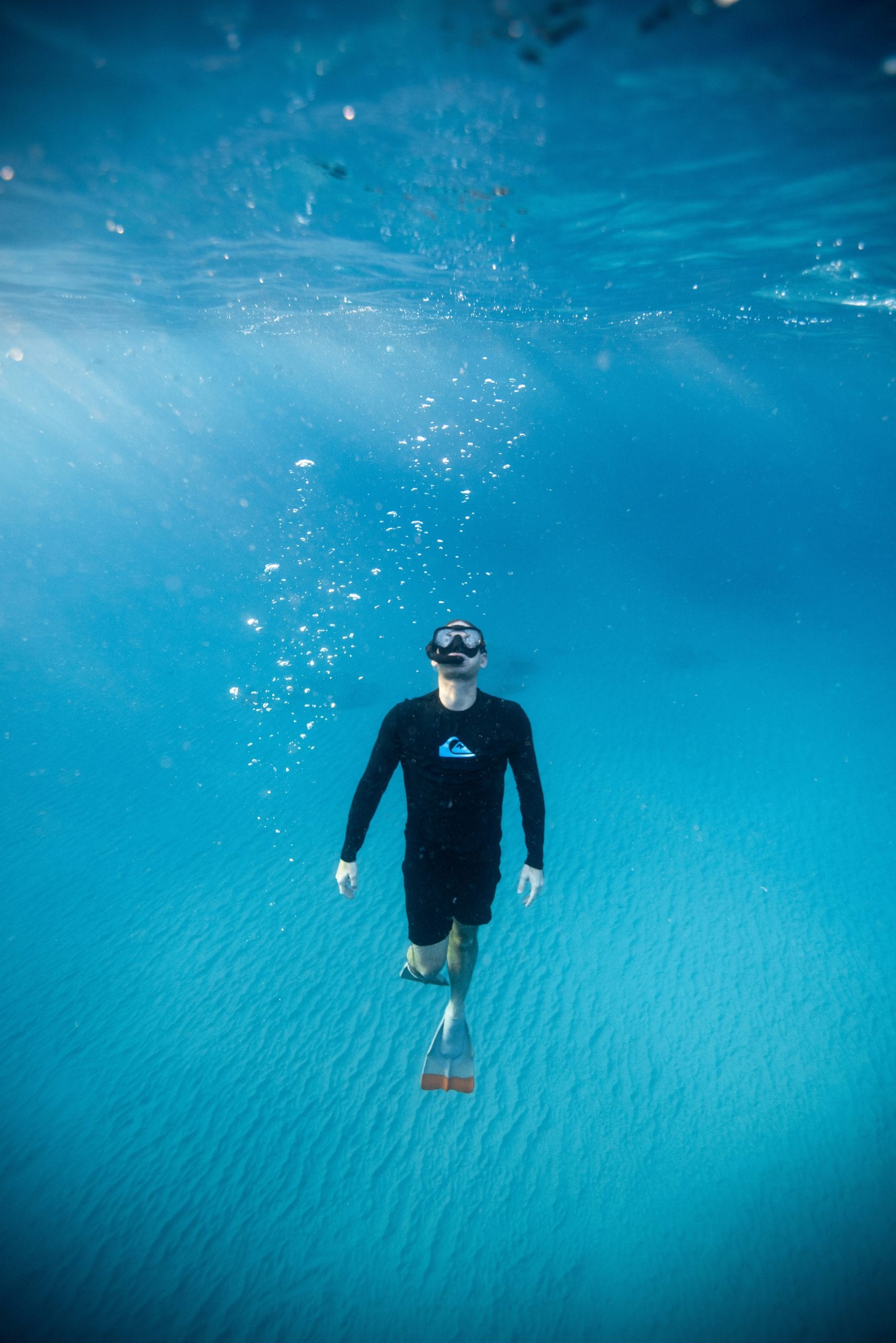
The first thing most notice is how quiet it is. No tank, no bubbles, no noise, just you, the water, and your heartbeat slowing as you go deeper. That silence is what makes freediving feel completely different.

Before getting in the water, you cover the basics on land. Breathing technique, equalisation (key skill to progress), safety, efficient finning and body position. In the water, everything is gradual. You start shallow, get comfortable, and build from there. No heavy gear, just a mask, fins, and a wetsuit.

Best for: knowing what day one actually feels like.

Compare with scuba
On the Water04
Stay Safe05
Section 05 / 05

Tips for freediving

Never dive alone, not a guideline, a rule. Blackouts can happen without warning, even to experienced freedivers. Always dive with a trained buddy. Do not force depth, progress comes from relaxation, not effort. Sort your equalisation early, the skill most beginners struggle with and the one that unlocks everything.

Eat light before diving, a full stomach and breath-hold do not mix. Give it more than one session, the first dive can feel unfamiliar, the second is where it usually starts to click.

Best for: building the right habits before pushing depth.

Plan your trip
FAQ

Frequently asked questions

The questions travellers ask us most before they arrive.

Is Koh Tao good for freediving?
Yes. Warm water year-round, calm bays, dive sites close to shore make it one of the best places in Southeast Asia to learn. Strong concentration of specialist schools and experienced instructors.
Can beginners try freediving in Koh Tao?
Yes. No experience needed. A Try Freediving session takes one day and only requires basic swimming ability, most schools ask that you can swim around 200 metres comfortably.
How much does freediving cost in Koh Tao?
Try Freediving 2,500 to 3,500 THB. Level 1 course 7,000 to 9,000 THB (2 to 3 days, usually all included). Prices vary by school and what is included.
What is the minimum age for freediving?
Around 12 years old for beginner courses and 15 for full certifications. Some schools offer junior programs with adjusted depth limits, check before booking.
Is freediving safe?
Yes when done properly. Safety is a core part of every course, including rescue skills and how to manage shallow water blackout. Never freedive alone.
Difference between freediving and scuba diving?
Scuba uses tanks and lets you stay underwater longer. Freediving is done on a single breath, no gear, no bubbles, no noise.
How long does a freediving certification last?
Does not expire. Once certified you can freedive anywhere at your level. If out of the water for a while, a refresher session is recommended.
Can I do freediving and scuba diving on the same trip?
Yes, many people do both. Just do not freedive after scuba on the same day. Freediving first, scuba after is the safe order.
next step

Try one session

One day in the water tells you more than hours of research. Book a Try Freediving and decide from there.

More activities